301 Moved Permanently
In late February, the Solar Energy Industries Association (SEIA) and the U.S. Solar Heating Council announced the launch of the U.S. Solar Heating & Cooling Alliance (SHC Alliance).
The new group, led by Mike Healy from Skyline Innovations, aims to advocate for thermal-friendly policies in the U.S. and increase awareness of solar heating and cooling - which perpetually take a backseat to PV in most potential customers’ minds.
In 2010, the U.S. installed 35,464 solar water heating systems, according to data from SEIA. In addition to the SHC Alliance’s efforts, what else can help those system-deployment numbers grow?
A technical report released last year by the U.S. Department of Energy’s National Renewable Energy Laboratory (NREL) concluded that high costs continue to hold back solar water heaters (SWHs) in the U.S.
“Despite the effectiveness of this technology, SWHs make up less than one percent of the U.S. water heating market, a fact that can be attributed to the high installed cost of an SWH system,” the researchers wrote.
In the report, aptly titled “Low-Cost Solar Water Heating Research and Development Roadmap,” NREL presented a series of suggestions to the industry for reducing costs. One such possibility is to develop a new simplified passive-design thermosiphon system that eliminates pumps, sensors and other components, reducing costs and installation time. This design could use either evacuated tubes or polymer film technologies, NREL said. 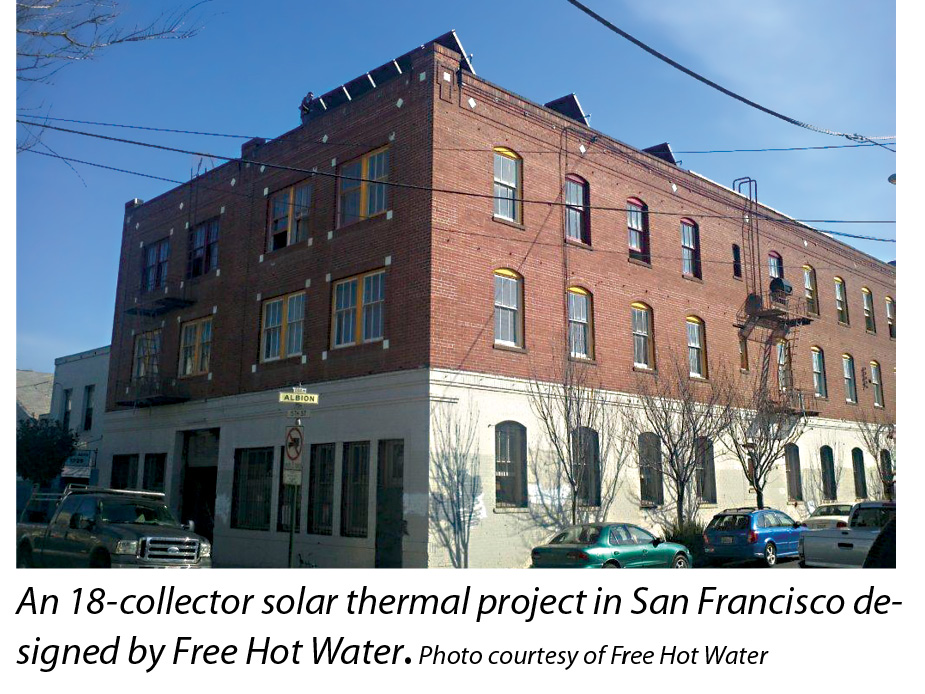
Additionally, as is the case in the PV industry, soft costs constitute a significant percentage of total SWH installation costs.
According to the report, improving workforce development, promoting demonstration projects and streamlining regulation certification could be pathways to cost reduction in this area.
What else can be done to guide the market forward? To get candid outside-the-lab answers from real-life professionals involved in the market, Solar Industry spoke with a range of experts representing various points of the solar thermal supply chain. The following panelists participated in a virtual roundtable:
- Chris Chappell, director of sales at SunWater Solar (installer);
- Justin Weil, president of SunWater Solar;
- Paul Burrowes, chief operating officer at Free Hot Water (distributor and system designer/engineer);
- Tara Prieto, vice president at AET Solar (manufacturer);
- Ed Gunn, sales manager at SunMaxx Solar (manufacturer and distributor); and
- Farid Dibachi, CEO of JLM Energy (manufacturer).
SI: Overall, how do you think the 2013 U.S. solar thermal market will compare to what we saw last year?
Ed Gunn: Better. We have already seen movement and progress on a number of commercial projects, as well as dealer activity in residential projects. We have had higher months in January and February 2013 versus January and February 2012.
Justin Weil: We think that the market will continue to slowly improve in 2013. We are seeing continued interest in solar water heating. As sustainability mandates kick in, energy prices rise and companies are more focused on sustainability goals, we expect to see even more interest in the technology.
Tara Prieto: We expect 2013 to yield a substantial increase in business due to political stability, which has consumer confidence up.
SI: How much are (currently) low natural gas prices affecting the solar thermal industry?
Farid Dibachi: The impact of the price of natural gas in the short term - the next 24 months - will be insignificant. The industry will continue to experience growth, mostly due to consumers’ being compelled to reduce dependency on fossil fuels.
Ed Gunn: [Natural gas prices are] definitely hurting, as cheaper energy drives down demand for solar when you are looking at it from just a financial point of view. It’s hard to tell exactly how much, but many customers who have gas are not interested at this time due to their dollars-per-Btu and longer subsequent payback.
Chris Chappell: The economics of a project are always under consideration, and lower natural gas prices have proven to be a hindrance.
Tara Prieto: Commercial solar thermal installs are less competitive when up against natural gas. Therefore, the solar thermal industry must more strategically target appropriate markets [that use] higher-cost fuel sources, like propane or electricity.
Paul Burrowes: Although many people in the solar industry do not support fracking, we’re going to have to end up working hand-in-hand with the natural gas industry as time progresses.
SI: What U.S. states do you consider your most important markets for solar thermal?
Ed Gunn: California and New York both offer outstanding rebate programs.
Chris Chappell: We are seeing some good trends in California, as more and more cities are requiring green certification (such as LEED) for construction projects. Often, solar water heating can contribute to this effort in a cost-effective way. The California Solar Initiative-Thermal (CSI-T) is also helping fuel growth in California.
Tara Prieto: Currently, our best markets are Florida, Hawaii and North Carolina. We are looking at developing new markets in California, Louisiana, Maryland/D.C., Arizona and Puerto Rico, mostly due to motivating local incentives.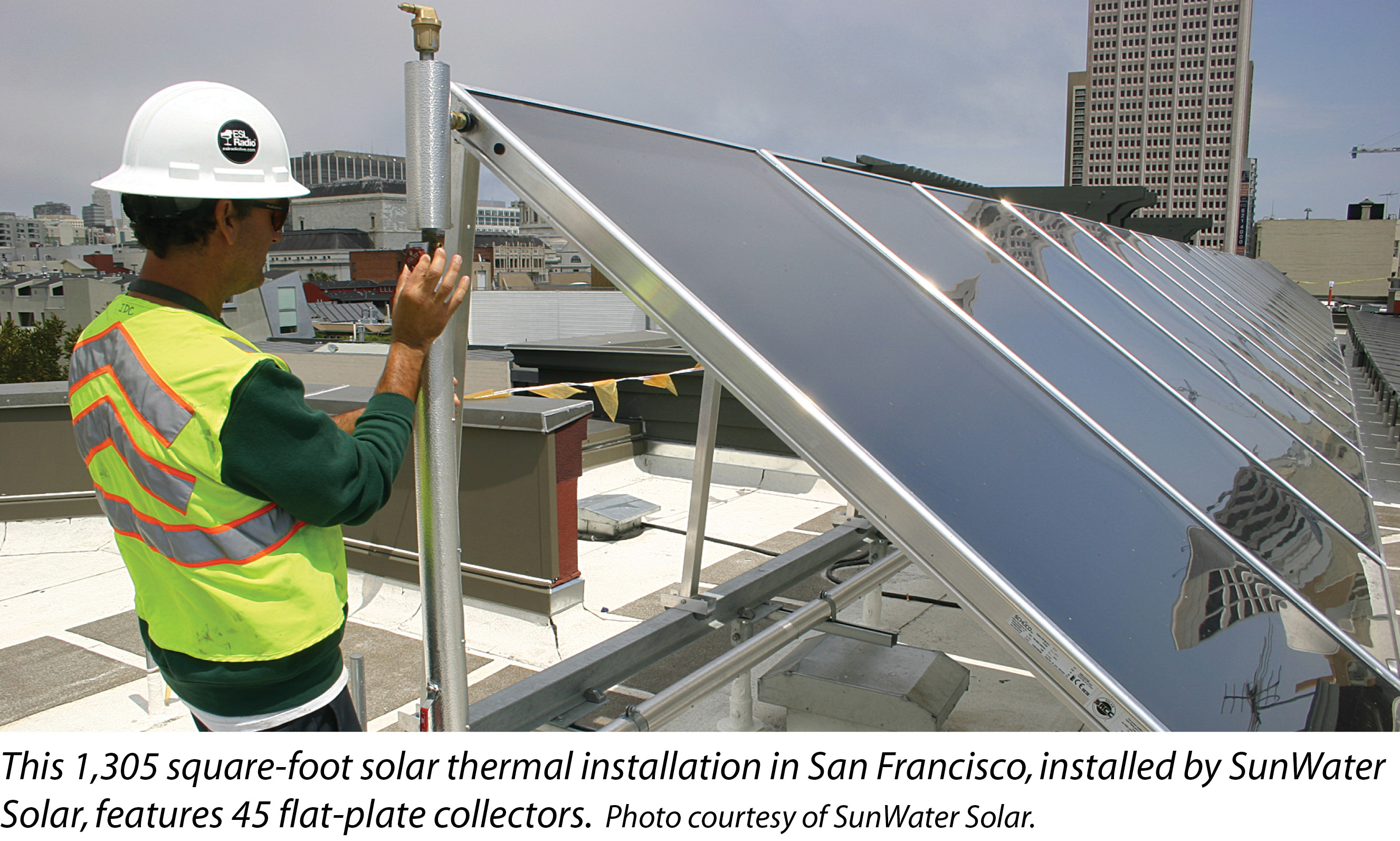
SI: In the markets where you’re active, what are the most important incentives right now? Any likely changes to these incentives?
Chris Chappell: Later this year, the CSI-T program will expand to include commercial pool heating and process heating/cooling. We think this will help develop the market.
Tara Prieto: Depending on the market, the important incentives include state renewable portfolio standards (RPS) and solar thermal renewable energy credits (RECs). Where these are not available, utility incentives are paramount in creating the business case for widespread solar thermal adoption.
As RPS carve-outs and RECs are being satisfied, we are seeing a decrease in solar heating. But integrators are able to reach scale in those markets, thereby creating more affordable solar heating for everyone.
Paul Burrowes: California has the best incentives at this time. Some states are on-and-off, depending on their budgets.
Ed Gunn: We are constantly hearing about funding drying up and see [it happen] in states such as Pennsylvania and Connecticut.
Farid Dibachi: The federal investment tax credit is a very attractive incentive in the U.S.
Ed Gunn: The federal tax credit is very important. However, any state rebates coupled with the federal tax credit really make the systems attractive and financially lucrative.
SI: Do you think consumer awareness of solar thermal is still lacking? What should the industry do to combat this?
Farid Dibachi: Consumer awareness of most renewable energy solutions is expanding, as some of these products are becoming commonplace. The industry must strive to provide robust and reliable products that earn trust and confidence.
Paul Burrowes: Consumer awareness is lacking. Even when you tell people that this type of solar is for hot water, they ask how it makes electricity.
SEIA is taking some of the necessary steps, and some of the utilities are starting to advertise their programs more.
Ed Gunn: Solar PV is still monopolizing the market and is what the majority of people are educated on.
There has to be a residential leasing program or power purchase agreements [so that] the finance industry can get behind the projects, as they did in PV.
Justin Weil: I think much of this [lack of awareness] can be attributed to the low energy prices in this country right now. If you look at other countries where energy prices are higher, they don’t face this same lack of awareness.
Tara Prieto: We are implementing a grassroots campaign to include educational forums and group engagements. These campaigns are being piloted in North Carolina.
SI: What is your assessment of current collector technologies?
Paul Burrowes: Flat-plate, evacuated tube and concentrated technologies all have their place. That’s why we’re collector-neutral and do jobs with all three.
Chris Chappell: We continue to see the development of cogeneration technology and higher-temperature technology. Overall, the technology is already available - we just need the market to grow, and as this happens, we should see even more technology advancement.
Tara Prieto: We have seen product changes in the marketplace that would fall under “reinventing the wheel.”
Ed Gunn: We need to look at more cost-effective collectors [rather than] more efficient collectors at this point.
SI: How about thermal balance-of-system (BOS) components - what new product developments have you introduced or found most useful?
Tara Prieto: AET has developed palletized commercial pumping stations, as well as pre-racked collector arrays. Both reduce labor costs on-site.
Justin Weil: Pre-built pumping stations are now used on the majority of our projects, which has helped with controlling quality and deadlines.
Paul Burrowes: I think the largest development will take place between the controller and the monitor: being Internet-capable.
Typically, you have a separate controller and monitor. Although they both measure Btu output, it would be nice to use a smartphone to control a system if need be.
Farid Dibachi: The fabrication process for tanks and piping has dramatically improved over the last five years or so.
But the main innovation has been in the area of total cost of ownership by integrating temperature sensors and monitoring capabilities into the collectors themselves. This reduces BOS costs and increases reliability.
Ed Gunn: We have started manufacturing non-pressurized tanks, which offer a number of advantages over pressurized tanks, [such as] lower cost and increased flexibility and longevity.
SI: When is monitoring necessary for solar thermal projects? For which types of projects might it still be considered too expensive?
Chris Chappell: Monitoring is an important part of any solar thermal project, regardless of size.
Because there are so many options now for solar thermal monitoring at a variety of price points, we don’t see monitoring as something that should be considered “too expensive.”
Ed Gunn: Monitoring is crucial if we want to start residential leasing, power purchase agreements (PPAs) and other utility-based applications. For the average homeowner, it’s not a necessity, but for the majority of commercial applications, it’s a must.
Tara Prieto: Residential markets are still not favorable for monitoring. These systems are 10 to 15 percent of the installed cost of the system - which is prohibitive for deep market penetration.
Farid Dibachi: We believe monitoring is always necessary. The question becomes one of when it is affordable.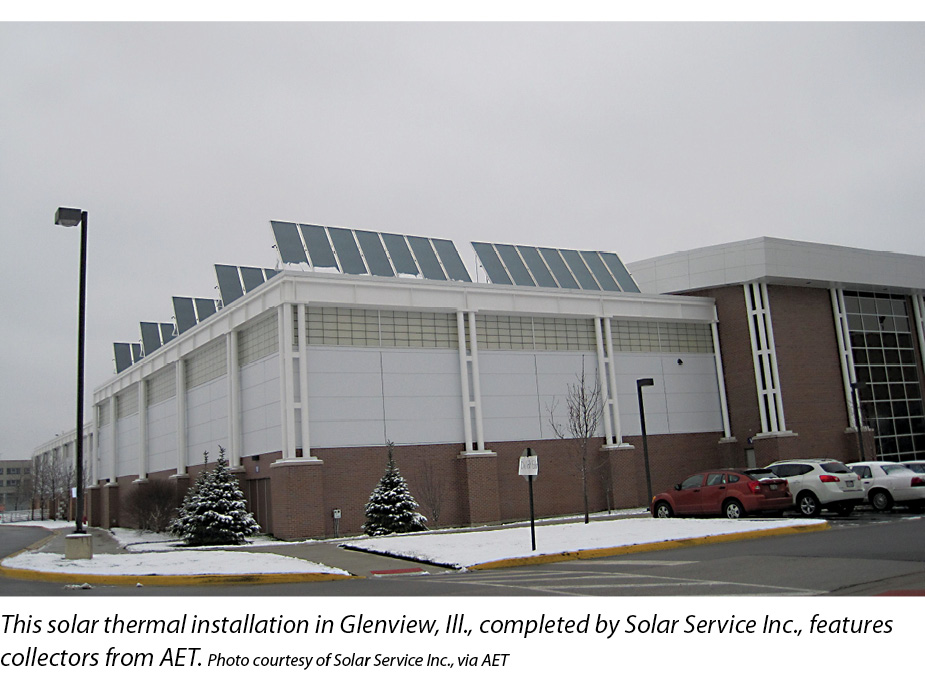
SI: Speaking of affordability, where are overall thermal system costs trending? What can each player - from collector manufacturers to installers - do to reduce costs further?
Paul Burrowes: I think as more organization gets into solar thermal, certain aspects will be more specialized.
The industry is starting to slowly mature and understand where different companies fit into the mix. Like in other industries, you can’t be all things to all people.
Ed Gunn: The dealer model has shown to be a tough one to support, with Schüco leaving the market and Apricus going to distribution. With greater demand will come lower pricing from installers and manufacturers.
There are collectors and systems being developed in which costs can be cut in half. However, we aren’t there yet.
Farid Dibachi: Cost reduction will come from reducing the overall cost of ownership. This [can be] achieved by increasing the intelligence of solar thermal systems. At JLM, integrating a micro-controller in the collector allows it to continually report its effectiveness.
Chris Chappell: What the industry needs most to reduce costs further is to see an increase in the number of projects being built. System costs have held fairly steady over the last few years, but we believe that only with increased volume will we see any significant reduction in costs.
Project financing is also going to be a big factor in growing the market.
Tara Prieto: Competition is playing a part in reducing installed costs. Economies of scale will further reduce installation and system costs for solar thermal across the nation.
SI: Finally, which segments or applications for solar thermal do you see as especially promising?
Ed Gunn: Military and larger commercial applications, as well as redevelopment programs for multi-dwelling buildings where federal or state programs are involved.
Tara Prieto: We do see the military as an early adopter of solar thermal. There are many projects installed or under way, and several more are in the pipeline due to mandates.
In the private sector, we see food processing and the quick-service restaurant markets as good prospects.
Paul Burrowes: PV has wound up serving a financial purpose based on leasing or PPAs.
I think there will be more financial organizations getting into the mix [in the thermal space], offering leasing and PPAs like we have in PV. At this time, there are very few players in that space.
Chris Chappell: Any segment of the market that is focused on long-term energy savings and carbon reduction is a promising segment.
We have seen that with government and military projects, as well as the university segment, where solar thermal can be viewed as a great long-term investment.
The private sector has been slower to move to solar thermal, but there are also promising developments there. S
Market report: solar thermal
Roundtable Discussion: What Is Holding Back Solar Thermal In The U.S.?
By Jessica Lillian
A recent NREL report suggests that the industry needs new technologies, but installers and manufacturers believe the answers are simpler.