
301 Moved Permanently
Led by California, the U.S. residential solar market enjoyed its best quarter in history during the third quarter of last year. According to data from the Solar Energy Industries Association (SEIA), residential solar deployment increased by 12% over that of the previous quarter.
This type of modest - but healthy - growth rate matches recent history. Residential solar - described by SEIA in its report as “by far the most stable” segment of the PV industry - has grown at a rate of between 3% and 21% for the past five quarters.
Is this trend sustainable? In order for the U.S. residential solar market to continue to steadily expand - or perhaps even chart a more dramatic growth path - installers, equipment manufacturers and their partners must address a number of obstacles.
From the system sales process to the final array inspection, costs must still be reduced, municipal inefficiencies must be remedied and consumer resistance must be overcome. On the system-finance side, third-party ownership (TPO) has skyrocketed in popularity by removing up-front costs for consumers, but some in the industry are skeptical of this model - and nearly all system finance structures remain dependent on the availability of incentives.
Given these and other challenges, here are five keys to continued growth for residential solar in 2013:
1. Streamlined permitting. More than one-third of solar installers believe that time-consuming and inconsistent system permitting procedures across the U.S. are holding back the market, concluded Clean Power Finance, a San Francisco-based provider of residential solar financing and software services, in a recent report.
“One of the biggest barriers to bringing down costs is that every jurisdiction has a different take on solar,” agrees Bob Kingery, co-founder and CEO of Morrisville, N.C.-based Southern Energy Management (SEM). Like many installers, SEM has actively provided solar education to its local inspectors. Unfortunately, however, frequent code changes - seemingly every month - necessitate constant monitoring and adjustment.
A transition from paper to digital documents, as well as increased collaboration between the PV industry and authorities having jurisdiction, among other strategies, may help with streamlining. But for the U.S., implementing a simplified nationwide permitting system similar to Germany’s would likely be impractical, and any change is likely to be slow.
“There is likely no magic bullet, particularly because solar is a relatively small industry, and most jurisdictions don’t even recognize that a problem exists - much less think about what solutions might be available,” says James Tong, senior director at Clean Power Finance.
In May 2011, the State of Vermont received nationwide praise for its new accelerated solar registration program, which replaces standard permitting procedures for installations 5 kW and smaller. Tim Biebel, vice president of Windsor, Vt.-based installer Prudent Living, reports that the process has become “a fair bit faster” for these smaller arrays and considers Vermont’s approach a worthy, safe model for the rest of the U.S.
“The contractor takes all of the liability of the project, anyway,” he notes. “If something fails, they’ve got to fix it.”
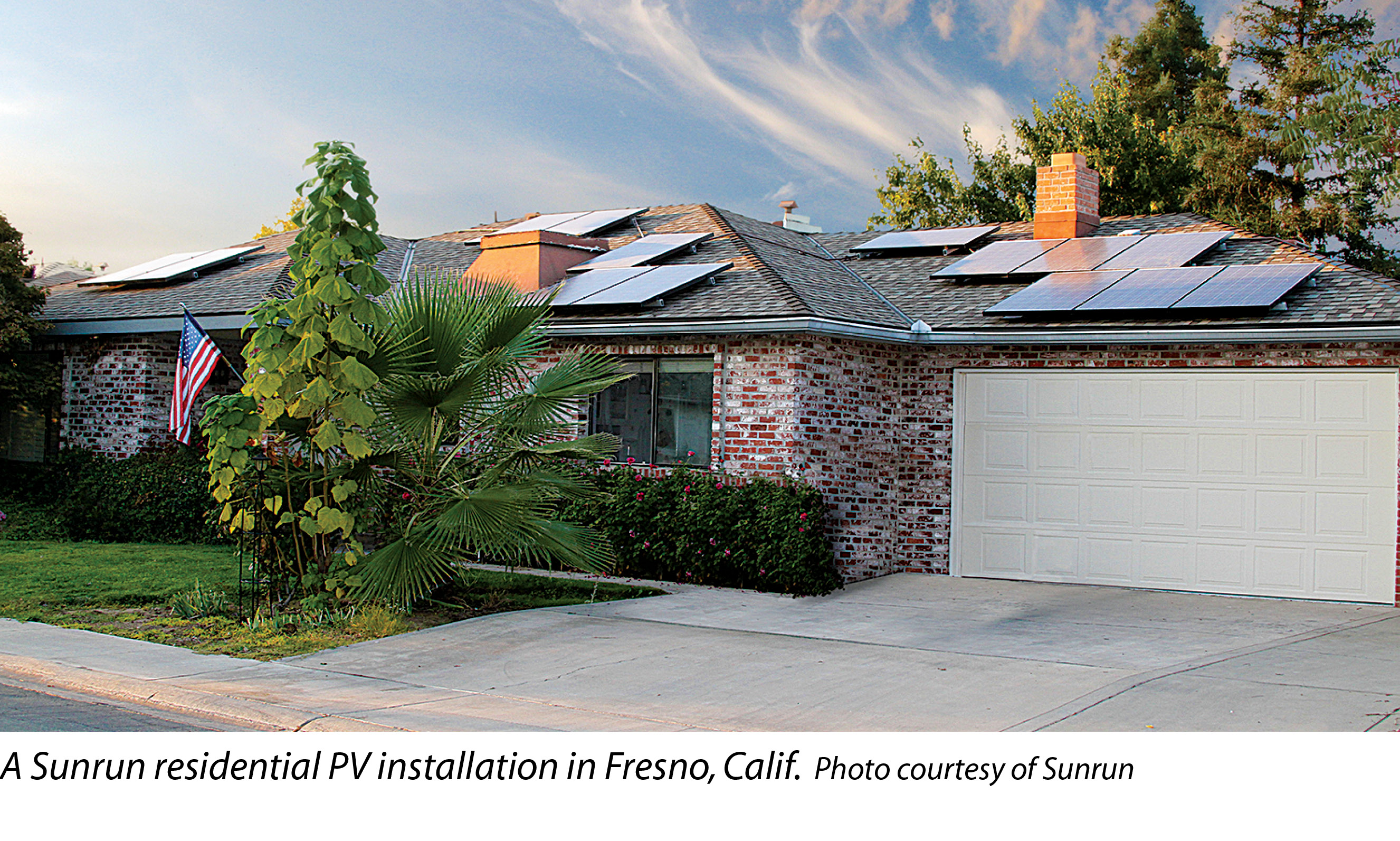
Elsewhere in the U.S., California recently took the notable step of capping permitting costs. Susan Wise, public relations manager at San Francisco-based home solar finance provider Sunrun, describes the cap as “reasonable, as municipalities are taking steps toward streamlining.”
2. Better consumer awareness and understanding. Although PV professionals are well aware of the technology’s ability to reliably create cost-effective electricity, one of the biggest challenges right now is finding capable sales people who can effectively communicate the message to potential customers and close sales - especially as the market expands beyond the tech-savvy and/or environmentally minded early adopters.
“There is still a huge gap in understanding,” says Scott Wiater, president of Rockville, Md.-based system integrator Standard Solar. “People still don’t believe you can generate real electricity from solar - it’s not mainstream yet.”
In order to reduce skepticism among customers, some installers take a brand-name approach with their selected modules. “If you can’t explain where the brand is from and why it’s good, it’s a more difficult sale,” says Kingery.
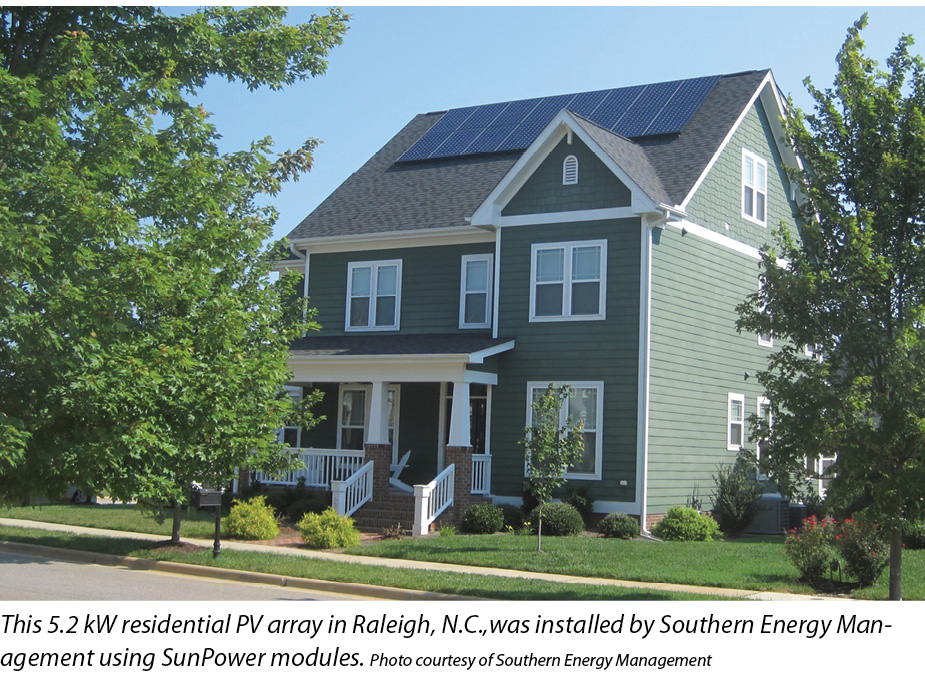
For this reason, SEM favors modules from Bosch - a recognizable consumer presence - and SunPower, which Kingery says has been successful in making a name for itself as a high-efficiency, high-quality brand with the backing of a major international firm (Total).
Earth Wind & Solar, a Coarsegold, Calif.-headquartered installer, believes solar companies can break through sales barriers by simplifying their offerings and making them more transparent. The company offers three standard system sizes - 12, 20 and 24 modules (currently from Perlight and Eoplly) - that fit in six different ground-mount configurations. Homeowners can select their chosen array based on electrical usage and system price, which is displayed online right next to each product, catalog-style.
“The complexity of solar has been the biggest problem,” says Robert Vaughan, president and CEO of Earth Wind & Solar. “The pricing - where it is today - is no longer No. 1. [The challenge is] getting the customer to not be overwhelmed with the technical aspects of an install. If they don’t understand it, they are not pulling the trigger.”
For all installers, in an increasingly competitive business environment, one marketing strategy to avoid is bashing competitors, according to Tong. Stirring up the classic trio of fear, uncertainty and doubt about other solar companies does not help an individual firm boost market share but, rather, drives would-be customers away from the technology altogether.
“Consumers will much rather opt for an imperfect but predictable status quo than ‘take a chance’ with solar,” he warns.
3. Reliable options for financing systems. TPO - which has soared to capture well over half of California’s market share in recent years - has been credited with helping to bring residential solar into reach for homeowners who lack the cash needed to buy an array outright or are uninterested in ownership, thus opening up new market opportunities for the residential PV industry.
Sunrun, which says it launched the industry’s first residential solar power purchase agreement (PPA) in 2007, currently operates in 10 states. Wise believes the solar-as-a-service concept resonates with modern consumers.
“There’s a continued relationship between the solar service business model and the concept in general among consumers of ‘dis-ownership,’” she notes, citing Zipcar and Airbnb as well-known counterparts outside the solar sector. “A number of business models are helping consumers get what they want for less money by helping them not own things that they don’t need to own.”
Nevertheless, despite its popularity, TPO cannot fully supplant other finance structures. Solar leasing and residential PPAs are unavailable in some key utility territories due to incentive structures, and - more importantly - some of the biggest providers of these offerings have run into industry criticism and legal uncertainty.
When SolarCity, one of the biggest solar lease and PPA providers, filed its mandatory Securities & Exchange Commission documents to become a publicly traded company last year, the company revealed that it - like other major players in the rooftop solar space - was under investigation by the Office of the Inspector General of the U.S. Department of the Treasury for possible system-price misrepresentation on incentive applications.
How will the outcome of the Treasury probe affect these providers - and the residential solar finance space? Installers express mixed views. “All the major third-party owners are going to have a problem, even if they’re not involved,” says Standard Solar’s Wiater. (The company, a Sunrun partner, currently installs approximately 60% third-party-owned systems and 40% self-owned systems.)
Kingery, who believes that TPO “clearly represents the future of solar,” predicts that the Treasury investigation will have little impact on TPO programs and may just redefine how far the providers can push the boundaries when putting their deals together.
If SolarCity emerges from the Treasury ordeal unscathed, the company may take the lead in bringing a long-awaited element to residential solar finance: securitization deals. Kristian Hanelt, senior vice president of renewable capital markets at Clean Power Finance, believes that SolarCity’s public-company credentials and recently announced master backup servicing agreement could help the company entice solar asset investors.
“The servicing agreement addresses one of the major impediments to securitization - the question on who will service the solar asset for the lifetime of the contract,” he explains.
4. Incentive certainty and availability. Biebel’s account of the current PV rebate situation in Vermont demonstrates the painful real-life effects that intermittent incentive availability can have on business, especially for small shops.
The scene may sound familiar to installers around the country: After several years of fairly steady rebates (most recently at approximately $0.55/W - a low point), the state abruptly ran out of funding for the program. A handful of Prudent Living’s customers had applied for permitting and signed their final contracts before the incentive well ran dry, sending their projects - and the company - into waiting-period limbo.
“It’s pretty frustrating,” Biebel admits. “If you put yourself in a customer’s shoes, historically, Vermont has had a rebate, so they’re just going to sit and wait. If the rebate might be coming out three months from now, why do it now?”
Residential payback time in Vermont without incentives currently hovers around 10 years, which is often considered too long for older customers who may be most likely to have the money to invest in a PV array. Biebel reports that lawmakers have discussed a possible return of the rebate, but a specific source of funding has yet to be identified.
Similar incentive anxiety regularly plays out across the U.S. “With 50 different states and thousands of utilities, I think everyone should be concerned,” says Kingery. “We definitely are in North Carolina. When the political landscape changes, there’s always the potential of incentives being changed or reduced.”
“The uncertainty is the worst part,” Wiater agrees. “Even if there’s something that works today, if there is a possibility it will be killed tomorrow, it affects long-term deals.”
In the long run, the industry can - and will - exist without incentives. Right now, rebate decreases can shrink the pool of prospective customers, increasing acquisition costs and, thus, potentially slowing overall industry growth, Tong says.
5. Cooperation from utilities. As the California Solar Initiative - the largest PV incentive program in the country - winds down, provisions such as net metering will be increasingly important parts of the residential solar finance equation. U.S. utilities, however, sometimes see net metering as a burden to non-solar ratepayers and their own bottom lines, and pushback in the form of caps and new charges for net-metered customers has cropped from California to Virginia.
“Net metering will be a contentious topic this year and the years to follow,” predicts Tong, echoing the thoughts of most solar executives.
“Consumers now have a choice [in their electricity source], and those kinds of changes can be disruptive to the status quo,” Wise says. However, she expects that utilities will eventually start to recognize the benefits that net metering provides to all ratepayers, especially if the PV industry takes the lead in helping to demonstrate these facts. (One recent study commissioned by advocacy group Vote Solar takes exactly this tact, touting $92 million in ratepayer benefits from solar net metering.)
As the net metering battle continues, the residential solar market may also see utilities adopt the “if you can’t beat ’em, join ’em” motto and enter the TPO solar market themselves.
Thanks to high returns and low default rates, solar is a financially attractive option for utilities, Hanelt says. “It allows them to lock in customers for 20 to 25 years and ensures a stable return on investment,” he explains. “There were some early investments in the sector by utilities like Pacific Gas & Electric, but I think we’ll see a significant increase in utility interest in 2013.”
The concept boasts a long history; some gas utilities sold solar systems during the Carter administration, Kingery points out. Now, “progressive utilities will want to be a part of third-party ownership,” he says. “The future of energy isn’t giant coal-fired plants anymore.” S
Market Report: Residential-Scale Solar Power
The Keys To Continued Growth For Residential Solar In The U.S.
By Jessica Lillia
Struggles with permitting, incentives and customer marketing could hold back the residential PV market.
si body si body i si body bi si body b
si depbio
- si bullets
si sh
si subhead
pullquote
si first graph
si sh no rule
si last graph